The current landscape is undergoing a seismic shift, driven by rapid advancements in AI, automation, and biotechnology. As traditional career paths evolve, education is shifting from rote memorization to developing future skills in students.
TMS, a STEM-focused institution, is at the forefront of this transformation. By integrating 21st-century skills into the core of its pedagogy, it ensures that the next generation is not only academically strong but also future-ready.
Understanding the Shift in Future Job Trends
To understand why future skills for students are critical, we must first examine emerging job trends. According to recent economic forecasts, millions of traditional roles may be displaced as the division of labor between humans and machines continues to change.
The jobs of tomorrow will favour individuals who possess a blend of technical literacy and soft skills that machines can’t easily replicate. As a result, the definition of a qualified candidate is changing. Employers now prioritize future-ready skills such as adaptability, critical thinking, and complex problem solving over static degrees.
The Pillars of 21st Century Skills
To prepare for these trends, education must focus on the 4 Cs of 21st Century skills:
- Critical Thinking: The ability to analyze facts, generate ideas, and solve problems objectively.
- Creativity: The capacity to think “outside the box” and approach challenges with innovative solutions.
- Collaboration: Working effectively and respectfully with diverse teams to achieve a common goal.
- Communication: The power to convey ideas clearly through various media and understand the perspectives of others.
At TMS, these pillars are not merely buzzwords; they are the foundation of the student experience. By applying these skills and abilities, TMS ensures that students can process information critically rather than just consuming it.
How TMS Prepares Students for the Future
1. A Dedicated STEM-Focused Curriculum
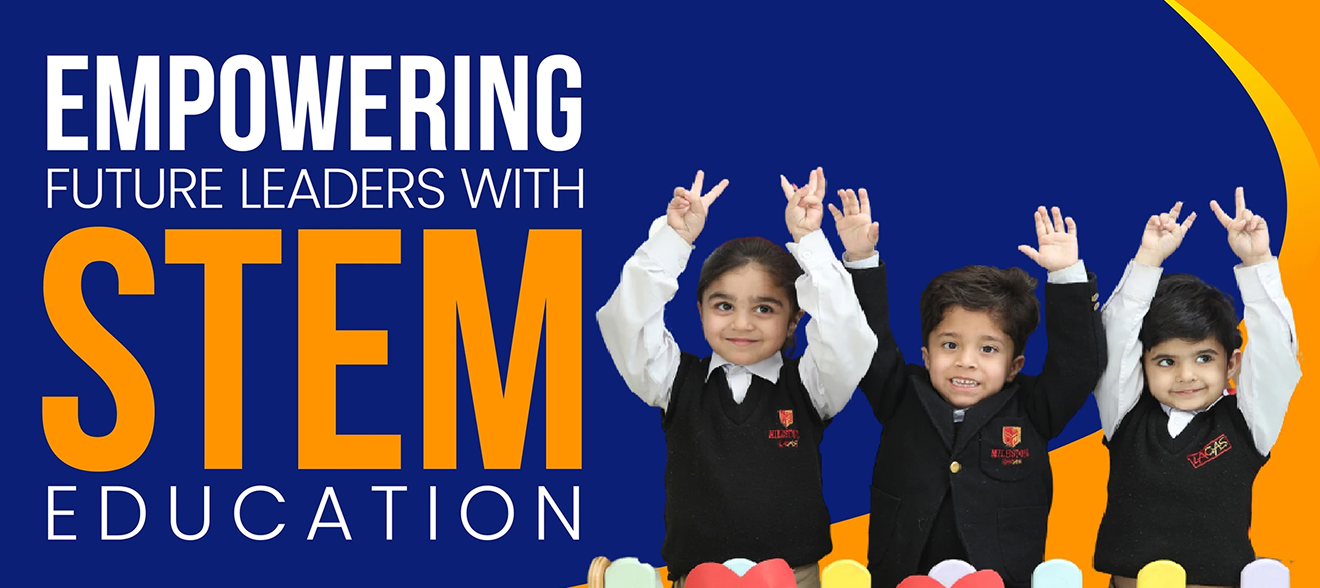
As a premier STEM focused school, TMS integrates Science, Technology, Engineering, and Mathematics into a cohesive learning framework. Through STEM education, students apply mathematical logic to scientific inquiry and use technology to design and engineer solutions.
As a premier STEM focused school, TMS integrates Science, Technology, Engineering, and Mathematics into a cohesive learning framework. Through STEM education, students apply mathematical logic to scientific inquiry and use technology to design and engineer solutions.
2. Innovative Teaching Methodologies: S.M.I.L.E.S and PBL
TMS utilizes unique frameworks to ensure students develop well rounded skills and abilities. The S.M.I.L.E.S approach ensures that early childhood and primary education address every facet of a child’s development.
Furthermore, Project Based Learning (PBL) allows students to tackle real world challenges. Whether designing a sustainable energy model or coding a basic application, PBL encourages students to apply 21st century skills in a practical context.
3. Cultivating Emotional Intelligence and PSHE
While technical skills are important, future job trends show a growing demand for emotional intelligence. TMS incorporates Personal, Social, and Health Education (PSHE) to help students manage their emotions, build healthy relationships, and develop empathy.
The Importance of Digital Literacy and Technological Fluency
In the context of future skills for students, digital literacy is non-negotiable. However, being “future ready” goes beyond knowing how to use a tablet or a computer. It involves understanding the ethics of AI, the basics of coding, and the ability to navigate the digital world safely and productively.
Being a STEM school, TMS provides students with the tools to become creators of technology, not just consumers. This shift is vital for staying ahead of future job trends where technical fluency is the baseline for almost every professional field.
Conclusion: Shaping the Innovators of Tomorrow
The future belongs to lifelong learners. As we look toward the horizon of the 2030s and beyond, it is clear that the traditional boundaries of career and education are dissolving.
Institutions like TMS are leading the way, proving that with a STEM focused curriculum and a commitment to individualized growth, schools can prepare children for the challenges of the future. By focusing on future ready skills today, we help build a more innovative tomorrow for our children.
Parents who want to give their children a future focused education can apply for admissions at TMS today. You can also schedule a campus visit through our official website to explore the learning environment offered at TMS.
FAQs
What are 21st Century Skills?
21st Century skills are a broad set of knowledge, skills, work habits, and character traits that are critical to success in today’s world. These include creativity, critical thinking, communication, and collaboration.
Why are future skills important for my child?
Future skills equip your child to tackle future job trends and navigate the complexities of the 21st century with confidence.
How does TMS incorporate future skills in its teaching?
TMS uses innovative teaching methodologies and an adaptive curriculum to develop future skills. The curriculum is also deeply rooted in STEM, preparing students for emerging technological innovations and challenges.
What is STEM education, and how does it contribute to my child’s development?
STEM stands for Science, Technology, Engineering, and Mathematics. It promotes critical thinking, strengthens scientific understanding, and prepares the next generation of innovators.